Clinic appointments are mandatory — please book at least 2 days in advance. Book online or call +91 85888 99099
IVUS, OCT & FFR-guided angioplasty in Delhi NCR · 04 / 05

Image-Guided PCI &
Drug-Coated Balloons

Angiography shows only the outline of an artery. Imaging from inside the artery (IVUS, OCT) and pressure measurement (FFR) help decide which blockage truly needs treatment, and make sure the result is the best it can be. In selected cases, a drug-coated balloon treats the artery without leaving a new stent behind.

Covered on this page

  • Intravascular Ultrasound
  • Optical Coherence Tomography
  • Fractional Flow Reserve
  • Drug-Coated Balloon Angioplasty
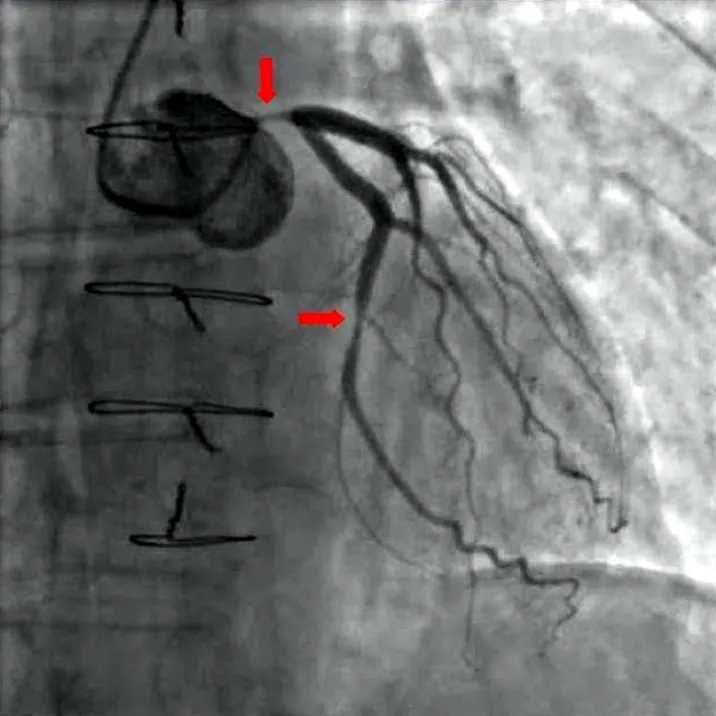
Coronary angiography X-ray image showing a narrowed heart artery
Image: “Angiography coronary stenosis 01”, via Wikimedia Commons.

Procedures, explained simply.

IVUS

Intravascular Ultrasound

What it is

A tiny ultrasound probe inside the artery shows the artery wall, the plaque and the exact size of the vessel.

Why it is done

Helps choose the right stent size and length and confirm that it is fully opened — especially useful in long, left main or complex blockages.

OCT

Optical Coherence Tomography

What it is

A light-based camera takes very high-resolution pictures of the artery from the inside.

Why it is done

Shows fine details such as calcium, stent expansion and stent edges, helping to perfect the result.

FFR

Fractional Flow Reserve

What it is

A thin pressure wire measures how much a blockage actually reduces blood flow to the heart.

Why it is done

Avoids unnecessary stents — only blockages that truly limit blood flow are treated.

DCB

Drug-Coated Balloon Angioplasty

What it is

A balloon coated with medicine is inflated in the narrowed area and releases the drug into the artery wall. No new metal stent is left behind.

Why it is done

Useful for stents that have narrowed again (in-stent restenosis), small arteries and other selected cases.

Who may need it

Your doctor may suggest this if you have:

  • A borderline (moderate) blockage on angiography
  • Long, complex or left main blockages
  • An old stent that has narrowed again
  • Small arteries, or cases where avoiding another stent is better

How it is done.

  1. Angiography

    The arteries are first seen on X-ray.

  2. Measure & image

    FFR checks blood flow; IVUS or OCT shows the artery from inside.

  3. Treat

    A stent or drug-coated balloon is used, sized precisely.

  4. Confirm

    Imaging confirms a good result before the procedure is finished.

Before the procedure

  • Share a list of all your medicines — especially blood thinners and diabetes medicines
  • Tell the team about any allergy, especially to contrast dye or iodine
  • A kidney function blood test is usually needed
  • Do not eat or drink for a few hours before, as advised (usually 4–6 hours)
  • Come with a family member and bring all your old reports

After & recovery

  • Take blood-thinning medicines exactly as prescribed — never stop them on your own
  • Avoid lifting heavy weights for a few days and keep the wrist or groin site clean
  • Most people return to light work within about a week, as advised by the doctor
  • Control BP, sugar and cholesterol, stop smoking and join cardiac rehab if advised
  • Keep all follow-up visits and tests
Chest pain right now?

Chest pain lasting more than 10–15 minutes, severe breathlessness, sweating or fainting can be a heart attack. Call +91 85888 99099 or go to the nearest emergency immediately — do not wait for an appointment.

Call +91 85888 99099

Heart care near you, in Vaishali & East Delhi.

Procedures are performed at Max Super Speciality Hospital, Vaishali. Consultations are available at the hospital and at Dr. Minocha's clinic on Vikas Marg, near Karkarduma Metro — easy to reach from across East Delhi, Ghaziabad and Noida.

Procedures · Hospital OPD · Emergency care

Max Super Speciality Hospital, Vaishali

W-3, near Radisson Blu, Sector 1, Vaishali, Ghaziabad 201012

Consultation · Mon–Sat 9:30–11:30 AM · Tue & Fri 4:30–5:30 PM

Vikas Marg Clinic, near Karkarduma Metro

23 Hargovind Enclave, Vikas Marg, opp. Metro Pillar 123, New Delhi

Patients visit us from

  • Vaishali
  • Indirapuram
  • Kaushambi
  • Vasundhara
  • Ghaziabad
  • Noida
  • Karkarduma
  • Preet Vihar
  • Laxmi Nagar
  • Anand Vihar
  • Shahdara
  • Vivek Vihar
  • Krishna Nagar
  • Mayur Vihar
  • Patparganj
  • Dilshad Garden

Common questions.

Where can I get IVUS, OCT or FFR-guided angioplasty in Delhi NCR?

Dr. Minocha uses IVUS, OCT and FFR at Max Super Speciality Hospital, Vaishali. You can consult him at the hospital OPD or at his Vikas Marg clinic near Karkarduma Metro.

Does imaging add risk?

IVUS, OCT and FFR are done through the same catheter during the procedure and add very little risk. They may add some time and cost, which will be discussed with you.

Can a drug-coated balloon replace a stent?

In selected situations, yes — for example when an old stent has narrowed again, or in small arteries. It is not suitable for every blockage; the choice depends on your artery.

Could FFR mean I do not need a stent?

Yes. If a blockage does not reduce blood flow significantly, it can often be treated safely with medicines alone.

Talk to Dr. Minocha
about your options.

Clinic appointments must be booked at least 2 days in advance.